I’ve always wanted to direct and today I say... ACTION!!!
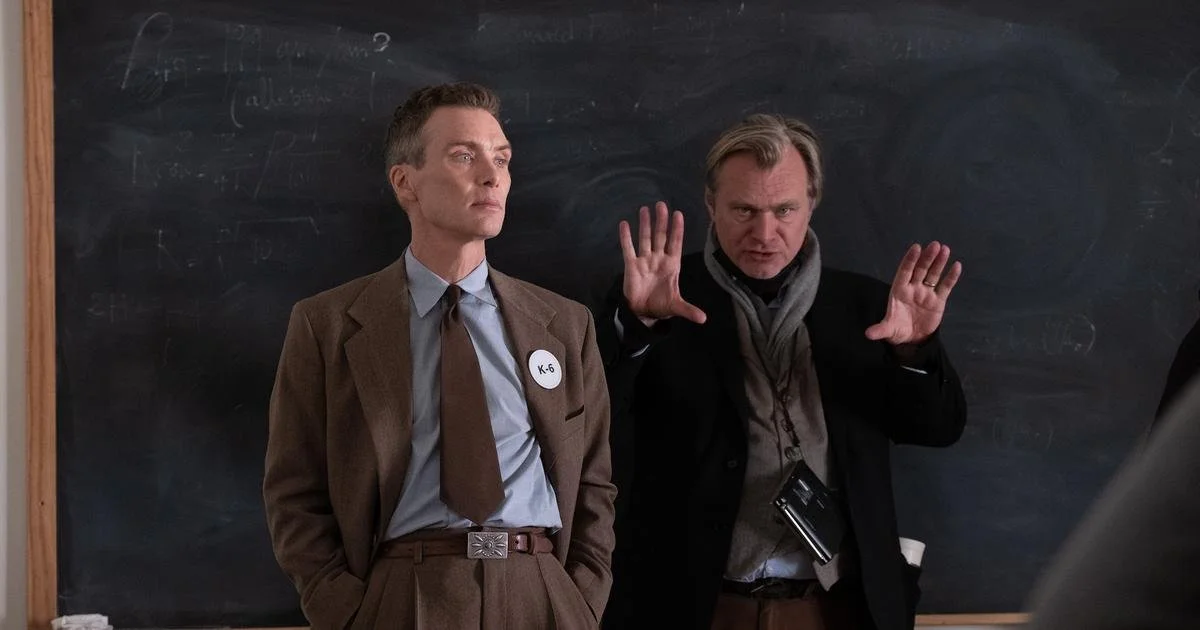
Christopher Nolan directing Cillian Murphy on the set of the Oscar-winning movie Oppenheimer
About a year and a half ago I stepped away from blogging consistently here on my website as well as posting on LinkedIn. I still did both on behalf of my clients, but I stopped doing it for myself.
It was not because I had less to say, but because the chaotic landscape around content, communication, and information had changed so dramatically that it forced me to rethink the role of writing content itself, both for myself and The Second Row and especially for my clients.
As we all know, generative AI has fundamentally altered how content is created, edited, and distributed. The ability to generate words, summaries, opinions, and even entire articles has become widely accessible to everyone. As that happened, I realized that the real value that I could bring to my work was quickly shifting away from creating, producing, and publishing content and toward something much more human: judgment, perspective, synthesis, and editorial direction.
For a long time, I thought of myself primarily as a writer, I was responsible for producing the words. But increasingly, I found myself thinking less like a writer and more like a director. Not in the cinematic sense of controlling every detail, but in the sense of shaping vision, creating a voice, identifying themes, refining tone, connecting ideas, and guiding narratives toward something coherent and meaningful.
A director doesn’t necessarily operate the camera, build the set, compose the score, or perform every role personally. What they do is determine what matters, what deserves focus, what should be cut, and how all of the pieces ultimately come together into something people feel and remember. That art is increasingly is the real challenge of communication in the AI era.
So instead of focusing on publishing more, for myself and my clients, I’ve spent a lot of time studying the new ways that ideas are shaped, how modern narratives spread, and why certain perspectives resonate while others disappear into the noise. I’ve became increasingly interested in the role of the editor rather than just the author. What this has meant for me is asking better questions, identifying meaningful patterns, and creating clarity in environments that are becoming increasingly saturated with generated information.
What’s Next? A Sneak Preview…
The more I observed, the more convinced I became that the future will not belong to the people who can produce the most content. AI can already do that. For myself and my clients the advantage will belong to the people who can develop original perspectives, connect ideas across disciplines, and build trust through thoughtful curation and analysis.
I also think this shift extends far beyond media or marketing. Every industry built on information is being reshaped by the same dynamic. As content becomes abundant, discernment becomes scarce. As generation becomes automated, interpretation and analysis becomes more valuable.
That realization has changed how I want to approach the creation and generation of content going forward. Less volume. Less reaction. More signal, more synthesis, and more intention.
Going forward I plan to step back into writing, both for myself as well as my clients, by approaching it differently. Less like a content producer, and more like a director shaping the larger story.